Saturday, 13 August 2016

What should you say in a love letter?


Anne-Catherine de Ligniville Helvétius
by Louis-Michel van Loo.
In 1779 Benjamin Franklin, when serving as the U.S. envoy to France, fell in love with Anne Catherine Helvétius, the widow of the Swiss-French philosopher, Claude-Adrien Helvétius. 

Nicknamed "Minette", she maintained a renowned salon in Paris using her dead husband’s accumulated wealth and among its habitués were France’s leading politicians, philosophers, writers and artists.

 In courting her attention, he sent her many letters expressing his love, admiration, and passion. 

In one, he claimed that he had dream that their dead spouses had married in heaven and that they should avenge their union by doing the same on earth! 
In another passionate plea, he wrote:

 “If that Lady likes to pass her Days with him, he in turn would like to pass his Nights with her; and as he has already given her many of his days…she appears ungrateful never to have given him a single one of her nights.”
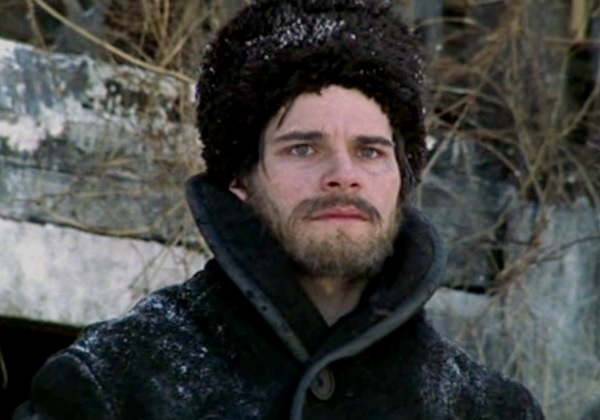


Boris Pasternak’s Dr Zhivago comes on strong when he writes to Lara saying; 

Don't be upset. Don't listen to me. I only meant that I am jealous of a dark, unconscious element, something irrational, unfathomable. I am jealous of your toilet articles, of the drops of sweat on your skin, of the germs in the air you breathe which could get into your blood and poison you. And I am jealous of Komarovsky, as if he were an infectious disease. Someday he will take you away, just as certainly as death will someday separate us. I know this must seem obscure and confused, but I can't say it more clearly. I love you madly, irrationally, infinitely.”

I think you'll agree that's powerful stuff but how would you feel if you got a letter like that? Would it please you or make you run a mile? I think I'd make a run for it. So what should you write to your love? Well if want to woo your love successfully science has some tips for you.

Yale psychologist Robert Sternberg’s theory of love, suggests that the ideal love letter should include the following components—intimacy, passion, and commitment. 

To test this hypothesis Donelson Forsyth and Kelli Taylor constructed a number of letters and asked people what they thought of them.

They discovered that, when it comes to love letters, commitment conquered all.
The letter that proclaimed, “I know we will be happy together for the rest of our lives” and “I couldn’t imagine a world without you in it,” was rated much higher, in terms of expressing love, than one that made no mention of commitment. 

Adding language that spoke of closeness and caring increased the letter’s good impression with readers, but it was commitment that left readers feeling loved and in love.

As to expressing passion in a letter; frisky letters, which went on for too long about the sender’s sexual passions, were viewed generally negatively by both genders; perhaps because they were more about lust than love. 

They also discovered that a message of commitment need not be delivered in a traditional love letter or a card; a simple email will do which is lucky as so many of us have lost the art of putting pen to paper. 

However, research shows that people think that letters are more trustworthy, and a hand written letter shows effort and care too. 

Therefore, if you want your love letter to get results you need to write it yourself, show your commitment to the relationship and put it in an envelope. Call me old fashioned but a bunch of flowers wouldn’t go amiss either.


For more see:
Boris Pasternak, Doctor Zhivago

The letter writer's tools

Pietro Antonio Conte Rotari -
A Young Woman reading a Love Letter
Of course, there would be no love letters without pens, ink and that luscious bright-red blob of sealing wax for the heroine of the story to crack open at her dressing table.

A good goose quill was the letter writer’s standard kit until the invention of the metal dip nib pen in the 1820s. 
These quills glided beautifully over the soft handmade paper made from rags allowing the writer to let their feelings and emotions flow from their hearts through their pens onto the paper. 
Woman writing a letter, Pietro Antonio Rotari
(1707-1762)
Some lovers wrote of ecstasy, distraction, and excitement while others described their love as a nightmare, saying they are unable to cope with the absence of their beloved.


According to the People's Magazine: An Illustrated Miscellany for Family Reading, 1867, quills were usually about 10 inches long and a mature goose could provide about 20 feathers a year from which pens could be made. 

Many of the feathers were imported from Russia and at the height of the trade some 6,000,000 a year were being manufactured in Britain with a man able to make up to 800 a day. This was even as the metal dip nib was being sold. 
It seems that writers loved their quills.

Penning a Letter by George Goodwin Kilburne
The ink people used varied, some made their own using old recipes, some simply mixed a little water and soot while others bought expensive India Ink made from a type of fine soot, known as lampblack that was combined with water. India ink was sold in bottles and was a mainstay of writers for much of the previous two centuries.


A classical intaglio.
Seals have been used for security since the time of the Ancient Egyptians; the Ancient Egyptians made theirs of mud and rolled them with an engraved stone with the pharaoh’s name on it. The Romans made beautiful intaglios, craved stones often set in rings with the owner’s unique symbol. By the Middle Ages seals were appearing on legal documents. 

A golden papal bull.
Perhaps the most famous seals were the papal bulls or ‘bulla’ which carried the metal seal (bulla), which was usually made of lead, but on very solemn occasions was made of gold. In the 18th century, the lead bulla was replaced with a red ink stamp of Saints Peter and Paul with the reigning Pope's name encircling the picture, although missives of historic importance, e.g. the bull of Pope John XXIII convoking the Second Vatican Council, are still sealed with the traditional lead seal.

Ordinary folk however used wax. By the Middle Ages, the make-up of the sealing wax was typically beeswax and 'Venice turpentine', a greenish-yellow resinous extracted from Larch trees. The brilliant red colour comes from the addition of expensive vermilion made from the mineral cinnabar. From the 16th century onwards, other ingredients were added like shellac to give the wax a glossy shine. By the mid nineteenth century a variety of colours were available including gold using the addition of mica, green, blue, black and white.

A Mulready Wrapper c. 1840
The use of sealing wax diminished with the introduction of the gummed envelope but that took much longer than you might think. By the early years of Queen Victoria's reign the Mulready envelope had appeared in England, it was a prepaid postal wrapper and forerunner of the modern envelope. 

Edwin Hill and Warren De La Rue were granted the first British patent for an envelope-making machine in 1845. These envelopes were not what we think of as an envelope today. They were made from a lozenge (or rhombus)-shaped sheet of paper, three edges were pasted together but there was no gummed opening, sealing wax was still required to close it. The envelope we know today did not appear until nearly 50 years later.

Wednesday, 10 August 2016

Love Letters - The Paper

This month’s theme is Love Letters, but before you can write a letter, you need paper.


As England moved into the 18th Century most of the paper being used was French, German or Dutch. There were a few paper mills dotted around the kingdom and one in Edinburgh by the mid century and of course, all the paper had to be made by hand.

In 1709 Britain invited Europeans to settle in its American colonies but German arrivals at London were far greater than shipping could take so some returned to Germany but others were relocated, mainly in Ireland but others stayed in England. One such was a man called Isaac Tipps who decided to settle on the Isle of Wight in Hampshire. He is recorded as a paper maker when he married Christian Rutter in 1711. It turned out that the Isle of Wight was not a particularly good location and the mill enjoyed only a brief life but local historians think that it provided coarse wrapping paper for local trades.

Whatever its quality paper is a fibrous mat made by mixing fibres with water, colour or bleach to make a suspension, when the water is drained away the fibres are pressed and dried to make a flexible bonded sheet. Any fibres will do, plant fibres were first used by the Ancient Egyptians to make papyrus but by the middle ages the European paper industry was based on the shredding of rags or other waste textile material. The rags were sorted and cut by women then boiled in open tanks using wood ash as a source of alkali to break the fibres down. The resulting grey slush was sorted and washed to shallow tanks or stone troughs to clean it then hammered with iron shod stamping hammers, similar to the type used for fulling cloth. The longer the fibres were hammered the finer the resulting paper.


Sorting the rags

Hammering the fibres
Making the sheets
Hanging the sheets to dry

As the 18th century progressed the production and use of paper in Britain gradually increased as higher rates of duty reduced imports. The British paper industry was able to rise to the challenge with the help of the introduction of a rag- machine known as a ‘Hollander’, invented in Netherlands sometime before 1670; it replaced the stamping mills that had previously been used for the breaking down of the rags and beating of the pulp. 


John Baskerville, Printer
The second was the creation of a woven mould John Baskerville, a Birmingham printer, who is more widely known for his Bakerville typeface these days than his printing. He wanted to improve the quality of his printing so he collaborated with James Whatman the Elder and developed a woven wire fabric to strain the fibres on, thus producing the first woven paper in 1757.


John Dickinson, Papermaker


The transition from hanging each separate sheet out to dry to creating a continuous roll began in 1809 when John Dickinson patented a machine where a wire-cloth covered cylinder revolved in the pulp suspension. The water drained away through the centre of the cylinder and a continuous layer of pulp was laid onto a felt covered roller (later replaced by a continuous felt passing round a roller) so that the sheets could be made to any length and cut to any size. Backed by George Longman, whose family controlled the Longman publishing firm, he established a number of paper mills in the south of England taking advantage of water for power and canals for transportation of his wears. Dickinson brands are still available today - Basildon Bond and Black and Red accounts books.

Production was further enhanced in 1821 when T B Crompton patented a method of drying the paper continuously; using a woven fabric to hold the sheet against steam heated drying cylinders.

In 1850, Dickenson’s  company started mechanical envelope manufacturing, with gummed envelopes for the first time and they pioneered the production of window envelopes in 1929.

In America, Thomas Gilpin opened a mill in Brandywine, Maryland using the cylinder paper machine in 1817. This was the first machine paper mill in the US. This mill operated from 1809 to 1828.

Today paper is still made by hand for specialist purposes and as lovely gift wrapping.


For further information see:

Tuesday, 9 August 2016

Love Letter 4 - Young Hearts

Voltaire to Olympe Dunover


Written in 1713 while in prison in the Hague.

Voltaire (1694-1778), the French philosopher and author is one of my hero Sinclair's favourite authors. He takes Candide to India with him and loses it when the ship goes down but once he's established himself in Tooley Street he's quick to buy himself another copy. 

Aged just 17, Voltaire was incarcerated because Olympe's mother and the French ambassador disapproved of their relationship. Such was the power of French aristocrats before the Revolution. 

Shortly after he wrote this letter, he managed to escape by climbing out of the window.

"I am a prisoner here in the name of the King; they can take my life, but not the love that I feel for you. Yes, my adorable mistress, to-night I shall see you, and if I had to put my head on the block to do it.

For heaven’s sake, do not speak to me in such disastrous terms as you write; you must live and be cautious; beware of madame your mother as of your worst enemy. What do I say? Beware of everybody; trust no one; keep yourself in readiness, as soon as the moon is visible; I shall leave the hotel incognito, take a carriage or a chaise, we shall drive like the wind to Sheveningen; I shall take paper and ink with me; we shall write our letters.

If you love me, reassure yourself; and call all your strength and presence of mind to your aid; do not let your mother notice anything, try to have your pictures, and be assured that the menace of the greatest tortures will not prevent me to serve you. No, nothing has the power to part me from you; our love is based upon virtue, and will last as long as our lives. Adieu, there is nothing that I will not brave for your sake; you deserve much more than that. Adieu, my dear heart!"

Arout

(Voltaire)

Thursday, 4 August 2016

Love Letters

Like my hero Sinclair, the Romantic poet John Keats (1795-1821) studied to become doctor but unlike Sinclair’s his heart was not really in it. . Keats’s letters to Fanny Brawne are among the most famous love letters ever written. As next-door neighbours, they exchanged numerous short notes, and occasionally more passionate letters.

Keats trained as an apothecary at Guy's Hospital from 1815 to 1816 and attended lectures on the principles and practice of surgery by the famous surgeon Sir Astley Cooper who also makes a brief appearance in my novel. In 1816, Keats received his apothecary's licence, which made him eligible to practise as an apothecary, physician, and surgeon.

Poet and surgeon John Keats

Keats's desire to become a poet led him to abandon medicine soon after he completed his training. In his 'Ode to a Nightingale' recalls his experience of caring for the dying:

The weariness, the fever and the fret
Here, where men sit and hear each other groan;
Where palsy shakes a few, sad, last grey hairs,
Where youth grows spectre-thin, and dies.

Ironically, it was his medical training that made him such a good carer for his brother Tom when he died from tuberculosis. In giving that care Keats became infected with the disease himself; there was no inoculation at the time, the now well-know BCG vaccine was first used in humans in 1921. Infection for Keats meant certain death but not before, he fell in love and wrote some of the world’s greatest poetry and love letters. Here is one of them.

“25 College Street, London

My dearest Girl,
This moment I have set myself to copy some verses out fair. I cannot proceed with any degree of content. I must write you a line or two and see if that will assist in dismissing you from my Mind for ever so short a time. Upon my Soul I can think of nothing else – The time is passed when I had power to advise and warn you again[s]t the unpromising morning of my Life – My love has made me selfish. I cannot exist without you – I am forgetful of every thing but seeing you again – my Life seems to stop there – I see no further. You have absorb’d me. I have a sensation at the present moment as though I was dissolving – I should be exquisitely miserable without the hope of soon seeing you. I should be afraid to separate myself far from you. My sweet Fanny, will your heart never change? My love, will it? I have no limit now to my love – You note came in just here – I cannot be happier away from you – ‘T is richer than an Argosy of Pearles. Do not threat me even in jest. I have been astonished that Men could die Martyrs for religion – I have shudder’d at it – I shudder no more – I could be martyr’d for my Religion – Love is my religion – I could die for that – I could die for you. My Creed is Love and you are its only tenet – You have ravish’d me away by a Power I cannot resist: and yet I could resist till I saw you; and even since I have seen you I have endeavoured often “to reason against the reasons of my Love.” I can do that no more – the pain would be too great – My Love is selfish – I cannot breathe without you.

Yours for ever
John Keats


Fanny, John Keat's great love


For more see:


Tuesday, 2 August 2016

Outlander's Clair Fraser has jumped from second world war nurse, to eighteenth century healer cum witch to surgeon and that's what's great about fiction but the real story of female doctors, in Britain at least, is one of profound struggle and individual persistence. 


When Charlotte Leadam, in my up coming novel Sinclair, a story based on the real Leadam family who lived and worked as apothecary surgeons in Tooley Street from the late 18th century to the mid nineteenth century, inherits her husband's apothecary shop she was not allowed to run the shop on her own account - only men were allowed to be licensed as apothecaries.
Elizabeth Garrett Anderson (1836 – 1917) was the first woman in Britain who qualified as a physician and surgeon and she did this when in 1865, she finally obtained a licence (LSA) from the Society of Apothecaries.

Garrett's life's work was opening the medical profession to women. She started her quest by working as a surgery nurse at Middlesex Hospital, In 1860 she attempted to enrol in the hospital's Medical School. She was not accepted but was allowed to attend private tuition in Latin, Greek and materia medica with the hospital's apothecary, while continuing her work as a nurse.
She employed a tutor to study anatomy and physiology three evenings a week. Eventually she was allowed into the dissecting room and the chemistry lectures.
Gradually, Garrett became an unwelcome presence among the male students, who in 1861 presented a memorial to the school against her admittance as a fellow student, despite the support she enjoyed from the administration.
She was obliged to leave the Middlesex Hospital but she did so with an honours certificate in chemistry and materia medica.
Garrett then applied to several medical schools, including Oxford, Cambridge, Glasgow, Edinburgh, St Andrews and the Royal College of Surgeons, all of which refused her admittance.
Having privately obtained a certificate in anatomy and physiology and in 1862, she was finally admitted by the Society of Apothecaries who, as a condition of their charter, could not legally exclude her on account of her sex.
She continued her battle to qualify by studying privately with various professors, including some at the University of St Andrews, the Edinburgh Royal Maternity and the London Hospital Medical School.
She co-founded the first hospital staffed by women, was the first female dean of a British medical school, the first female doctor of medicine in France.
She was the first woman in Britain to be elected to a school board and, as Mayor of Aldeburgh, she was the first female mayor and magistrate in Britain.
Pictures: 1. Claire Randall (Caitriona Balfe) in Outlander Season Two Finale "Dragonfly in Amber"
2. Elizabeth Garrett Anderson

Wednesday, 6 July 2016

July Independence Days

July is the month when America and France celebrate their national independence days. For the Americans their celebrations focus on the signing of the Declaration of Independence on 4th July 1776. The French commemorate the storming, on the 14th July,1789 of Prise de la Bastille.

Photo credit: blog.fluentcity.com

The eastern seaboard of the country that is now known as the United States of America was Britain’s largest and most successful colony until the East India Company secured most of the Indian sub-continent for the company and the crown at the battle of Plessey (see previous post).

Along with the French, Spanish and the Dutch the British fought to keep and expand its territory on the American continent since its first colonies were established in the 16th century but were eventually driven out in 1783.

The British adventure in America began with the establishment of the James Town colony in 1607 and since then the colony had grown. By the mid 18th century the colony had achieved some measure of self government but was still subject to the British parliament.

The American Revolutionary War (1775-1783) has its origins in the resistance of many Americans to taxes imposed by the British parliament. On December 16, 1773, unhappy with the high price of tea, which had to be purchased from British East India Company, a shipment was dumped in Boston harbour as a protest, the event that is now known as the Boston Tea Party.

The British government retaliated by closing the port of Boston and taking away the self-government the colony had achieved. The Bostonians responded by rejecting British rule and setting up a shadow government. Twelve other colonies supported them and formed a Continental Congress to coordinate their resistance. On July 2, 1776, the Continental Congress formally voted for independence, and issued its Declaration two days later on July 4.

Thomas Jefferson, draftsman of the U.S. Declaration of Independence
and the nation's third president
In my novel Sinclair (available autumn 2016) which takes place between 1786 and 1788 Captain Francis Greenwood is bound for Madras on the East Indiaman, Sherwell. He is one of the hundreds of officers let go by the British at the end of the American war. Like ex-service men today Frank Greenwood, the fourth son of the MP for Staffordshire who would inherit nothing from his father, had to find another job when the British Army no longer needed him so he joined the East India Company like so many other hopefuls at that time and headed for Bengal.

At supper Sinclair fell into conversation with Captain Greenwood a young man like himself intent on forging a successful career in the East. He was a retired British Army officer who like so many others had been let go after the defeat in America. Greenwood, much to Sinclair's chagrin, was admired by both the men and the women on board. His good looks and easy temperament seemed to smooth all his social interactions. He was gracious, charming and good company. He spoke eloquently of his experience in the American War telling Sinclair that he had had a mainly diplomatic role and had not seen much in the way of fighting. Over their meal he told Sinclair how he had sailed from Nova Scotia up the Hudson River with his commanding officer, Sir Guy Carleton to a conference with General Washington at Orangetown. There they agreed how what was left of the British Army and the thousands of ordinary people who had remained loyal to the Crown were to be removed from the new and independent country.”

Sir Guy Carleton: the last British Commander in North America


 Travelling in France at the end of 1788 Dr Sinclair and John Leadam discuss the state of the country: 

In every town and village we pass through there are vagrants on the road and groups of young men looking for work. In the woods and along the roadside we see women and children foraging for food. It looks like they are eating weeds, snails, and mushrooms in fact whatever they can find. From what I have seen so far I am not impressed.”

“I agree John, things look pretty bad.”

 When they stopped for lunch John decided to their driver Joseph the cause of the malaise.

“It’s because of you British,” he said with a sour face. “The men who weave are without work.  This new Commercial Treaty will be the death of us. We cannot compete with your English factories. And now there is no food. In the summer it did not rain and to compound our problems when the rains came the Lord sent us hail the size of men’s fists that destroyed the crops in the fields. This harvest is the worst in living memory. The bread you are eating is most probably made of English corn and the oats we feed the horses are English too. There is nothing here but the landlord must still have his rent. The King has been merciful and has suspended the collection of normal taxes but the country is bankrupt someone has to pay for fighting you British in America and Canada. The trouble is that the nobles don’t want it to be them; they think us little people should foot the bill. France is in crisis Monsieur, people disappear into prison never to see the light of day again and to make matters worse the weather was already unusually cold for the time of year; it will be very bad for many Frenchmen this year messieurs.”

The Bastille in 1715
The Storming of the Bastille on the afternoon of 14 July 1789 came as food prices soared in Paris. The castle was taken by the residents of the Faubourg Saint-Antoine who were some of the poorest people in city. The medieval fortress represented royal authority in the centre of Paris. The prison contained just seven inmates at the time but its storming became a symbol of the people’s triumph over the abuse of the absolutist monarchy governing France at the time.
The Bastille was demolished by order of the Committee of the Hôtel de Ville during the revolution and souvenirs of the fortress were transported around France and displayed as icons of the overthrow of despotism. Over the next century, the site featured prominently in political protests and revolutions. Today the there is little of the site to be seen except for some stone foundations that were relocated to the side of the Boulevard Henri IV.

Both the American Revolutionary War and the build-up to the French Revolution provide a back drop to my new novel. Times of war and conflict are times of misery and heroism: Find out what happens to Dr Sinclair and Frank Greenwood in my novel, Sinclair, which will be available to read in the autumn of 2016.